
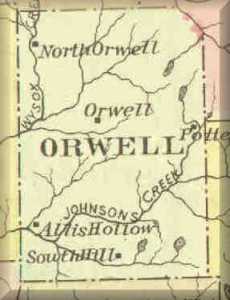
 This week in #52ancestors addresses the Buttles family ancestor who moved from Connecticut to Bradford County, Pennsylvania. Although the original family appears to have spelled the name Buttolphs, by the late 18th century it had settled into the Buttles spelling. This does not keep every index system in the world from corrupting that into Battles, Butler and Butter but hey this is all about discovery and having fun, right?
Jarvis Buttles was born 16 October 1800 in Hartland, Connecticut, one of nine children of Elihu and Lovisa Reed Buttles. Elihu migrated from Connecticut to South Hill, Pennsylvania during the winter of 1817-1818, and according to the published county histories: “He settled at South Hill, put up a factory and engaged in the manufacture of wooden dishes. He died in 1823 and was succeeded in the business by his son Jarvis who occupied the homestead until his death, Oct. 5, 1890, aged 90 years.” Whatever dishes they manufactured must not have a “Buttles” maker mark because I have scoured the world with no luck finding one of theirs.
Jarvis first married on 21 Oct 1828 to Alma Cowdrey (1805-1843). The marriage occured in Hartland, Connecticut, but the Hartland town marriage record notes that his residence was Orwell, Pennsylvania. It also noted that his occupation was “reverend.” They had nine children:
- Otis Jarvis Buttles (1830-1918)
- Lester Franklin Buttles (1831-1885)
- Emily Jerusha Buttles (1832-)
- Harlow Jonathan Buttles (1834-1924)
- Samuel Foster Buttles (1836-1884)
- Eliza Melissa Buttles (1838-1894)
- Juliana Buttles (1840-1860)
- Elizabeth Alma Buttles (1842-1906) (my great, great grandmother)
- Elihu Buttles (1843-1843)
 Alma may have died as due to complications in the birth of her last child as her death is recorded as 2 July 1843. Jarvis married a second time on 2 7 March 1848, to Sara Ann Horton (1816-1881). They had two children: Louisa Buttles (1850-1902) and Elihu Buttles (1851-1901). Louisa appears to have changed her name often over her short life. I found her in various records as Ellen, Levisa, Louisa and Ida Louisa.
In addition to manufacturing wooden bowls and farming, Jarvis Buttles served as the postmaster of South Hill in Bradford county from 1853 to 1857 and then from 1858 to 1871. The Post Office was then turned over to his son Samuel Buttles, who held the post until 1884 when Jarvis’s son Harlow Buttles took the post. Harlow served until 1904 when the PO passed out of direct Buttles hands.




According to the US Postal Service:
“The job of postmaster was an important one — candidates for the job were proposed by the outgoing postmaster, the local community, or local congressmen. Beginning in 1836, postmasters at the largest Post Offices were appointed by the President and usually received the job as a political plum. The Postmaster General continued to appoint postmasters at smaller Post Offices. The Post Office often was kept as a sideline to the postmaster’s primary occupation, such as storekeeper.”
Jarvis Buttles died on 5 October 1890 and is buried in South Hill Cemetery in Orwell, Pennsylvania.


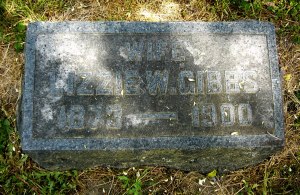 His sister Mattie J. Gibbs was born in 1892 but died in 1919 and his brother Elton Russell was born in 1894 but died in 1917. Their mother, Elizabeth “Lizzie” Jones Gibbs died in 1900.
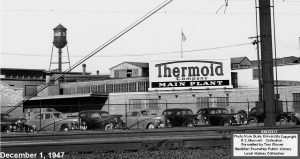 Francis eventually settled in Trenton, NJ where he worked for a company called Thermoid, which made rubber brake pads. The children all appear to have come of age in Hamilton township.
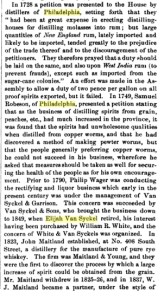 Elijah appears to have established his grocery and then expanded it to sell liquor. He then gave up the grocery business and solely sold wine and liquor. He appears in city directories and merchant listings fairly continuously from 1818 until 1850. During the 1830’s he was in business with John Garrison but in 1835 this is dissolved and Elijah continues on alone, eventually adding his sons to the concern. One curious discovery: in 1824, Elijah was granted relief from the US government because three hundred and fifty-two cases of sugar were destroyed in a fire in 1822, upon which $4217 in duties were due. Elijah apparently appealed for aid in paying the duties as the sugar had not been insured.
 He also appears to have been active in local politics as he has an unsuccessful bid for election to the Common Council in Philadelphia in 1827. In 1839 he is appointed to a committee to examine and report on the state of the Schuylkill Bank.
 This week in #52ancestors I once again come up against that age old genealogical principal of looking for one record and finding not that record but another that solves a different mystery.
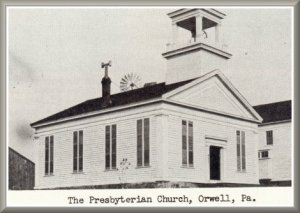 Chandler and family appear to have been involved in the Presbyterian Church, as on 14 January 1845, Chandler Prince puts up $5.00 toward the building of a Presbyterian church in Rome, Pennsylvania.
![Jones_Benjamin_W_business_Trenton_State_Gazette_1858-05-07_[2]](https://tellingmystory.blog/wp-content/uploads/2018/03/jones_benjamin_w_business_trenton_state_gazette_1858-05-07_2.png?w=300&h=265) I do not know much about Benjamin W. Jones’ business enterprises. In the 1850 Census, he is listed in Philadelphia as a merchant with $15,000 in real estate. He then appears in business with Richard Jones at Florence but that business dissolved in 1858. In the 1860 Census, the family is living near Richard Jones in Mansfield, Burlington County, New Jersey and his occupation is listed as founder. By 1870, Benjamin, Harriet and Ellen are living in Trenton, where his occupation is listed as none, with no real estate or personal property valued. However, Harriet does possess $10,000 in real estate and persona”l property valued at $25,000. In the 1880 Census, Benjamin is listed with Harriet and both children, and while his occupation is listed as travelling salesman, there is a check mark in the box marked “is the person sick or temporarily disabled so as to be unable to attend to ordinary business or duties.”
I do not know much about Benjamin W. Jones’ business enterprises. In the 1850 Census, he is listed in Philadelphia as a merchant with $15,000 in real estate. He then appears in business with Richard Jones at Florence but that business dissolved in 1858. In the 1860 Census, the family is living near Richard Jones in Mansfield, Burlington County, New Jersey and his occupation is listed as founder. By 1870, Benjamin, Harriet and Ellen are living in Trenton, where his occupation is listed as none, with no real estate or personal property valued. However, Harriet does possess $10,000 in real estate and persona”l property valued at $25,000. In the 1880 Census, Benjamin is listed with Harriet and both children, and while his occupation is listed as travelling salesman, there is a check mark in the box marked “is the person sick or temporarily disabled so as to be unable to attend to ordinary business or duties.”
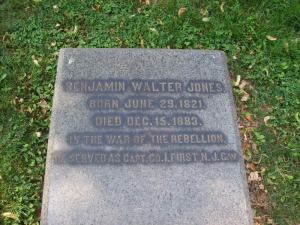 Benjamin Walter Jones died 15 December 1883 in Philadelphia and is buried at Laurel Hill Cemetery in Philadelphia. His death notice in the Philadelphia Inquirer notes that his brother hosted the funeral at his home at 1818 Delancey Place. He left no will, which is not a surprise as his wife Harriet appears to have owned everything.
 Mary Craw Frost was born on 13 May 1808 to Aaron (1778-1855) and Polly Craw (1782-1860) Frost. She was born in Wilbraham, a tiny burg in what is now Hampden County, Massachusetts. Mary was one of twelve children, a fact that appears in conflicting documentation about their names and birth order. Somewhere there is a bible…
 I also have conflicting information about how she and her parents end up in Bradford County, Pennsylvania. Some records state that she married her husband Henry Hine while in New York, which would make it Greene County. Cairo, NY is almost directly west from Wilbraham, so it is possible that on their way west they stopped off, or perhaps that was their destination, but when Hine moved on to Orwell, her parents went along as well.
 Sadly, beyond the bearing of children, I have very little information about Mary C. Hine. I know that she was a member of the Presbyterian Church in New York but switched to the United Methodist Church in the mid 1870’s possibly because her daughter Sabrina Hine Hines did as well. Mary C. Hine lived with Sabrina and Joseph Hines after the death of her husband Henry W. Hine in 1868. Mary Craw Frost HIne died on 10 August 1889.
 My first introduction to Sabrina Arzilla Hine was in 1990 or so. I was visiting Dad’s cousin Edith Hine in Athens, Pennsylvania, and she handed me an envelope and asked me to take good care of the contents. Inside were some family letters to Sabrina from her brothers written during the 1860’s. How cool! And how honored I was to receive such a gift. And so it is with pleasure that I share these treasures this week of #52ancestors, especially as she is an aunt although not maiden one!
 Sabrina’s brother Percival joined the 141 Pennsylvania Volunteers at the start of the American Civil War, and served in Company D along with many friends and neighbors. This was the war in which the Americans would learn that while on paper the idea of serving with your brothers and neighbors might look like it would inspire bravery, but in reality it destroyed whole communities when their young men were wiped out in a single battle. Percy’s letters comment on his comrades, many of whom Sabrina knew, including their own father.


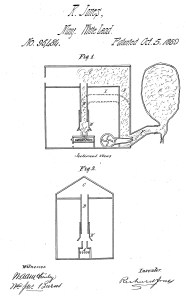 Although Richard appears to have gone to work early in the family foundry business at Hanover, NJ, he also seems to have been interested in diversifying the family holdings. He and his brother Samuel Howell Jones established and dissolved several businesses in Hanover, Florence and Trenton between 1845 and 1870. The pipes used in the Boston Water Works in 1847 came from Hanover Furnace. In 1850 Richard was a principle in the New Jersey Exploring and Mining Company. He established the New Jersey Zinc Paint Company, most likely as a result of his experiments with and eventual patents on zinc oxide extraction (1854 and 1869). Richard was definitely something of a chemical genius but I am not sure about his business expertise. The iron industry in the 19th century was a risky business. with many smaller operations failing due to pressures of the economy and production expenses.
 Telling My Story