If there is anything to be grateful about the change in family dynamics in the 20th century, it is that father’s could hold their babies and play with their children. This is George Raymond Prince (1895-1939) holding either George Raymond Jr. (1921-2004) or Paul Everett Prince (1924-1991). I love the casual informality here but my heart breaks a little as this photo is included in an album my grandmother Kathryn Preston put together for my father about his family. Sadly, Barclay Gibbs Jones Sr. never got to hold Barclay Jr. this way.
George Raymond Prince holding George Raymond Prince ca. 1921
George R. Prince, Philip H. Prince and Kathryn M. Prince were the children of George Cornell Prince. They make up the New Jersey branch of this early Bradford County, Pennsylvania family.
George R. Prince, Sr. lived in Camden and worked the family business at Prince Concrete. He married Clara about 1920 (would love more detail on this!) and they had five children: George R. Jr. (1921-2004), Alice Rae (1922-1922), Paul Everett (1924-1991), Joyce Eleanor (1926-2003) and David Roger (1924-2004).
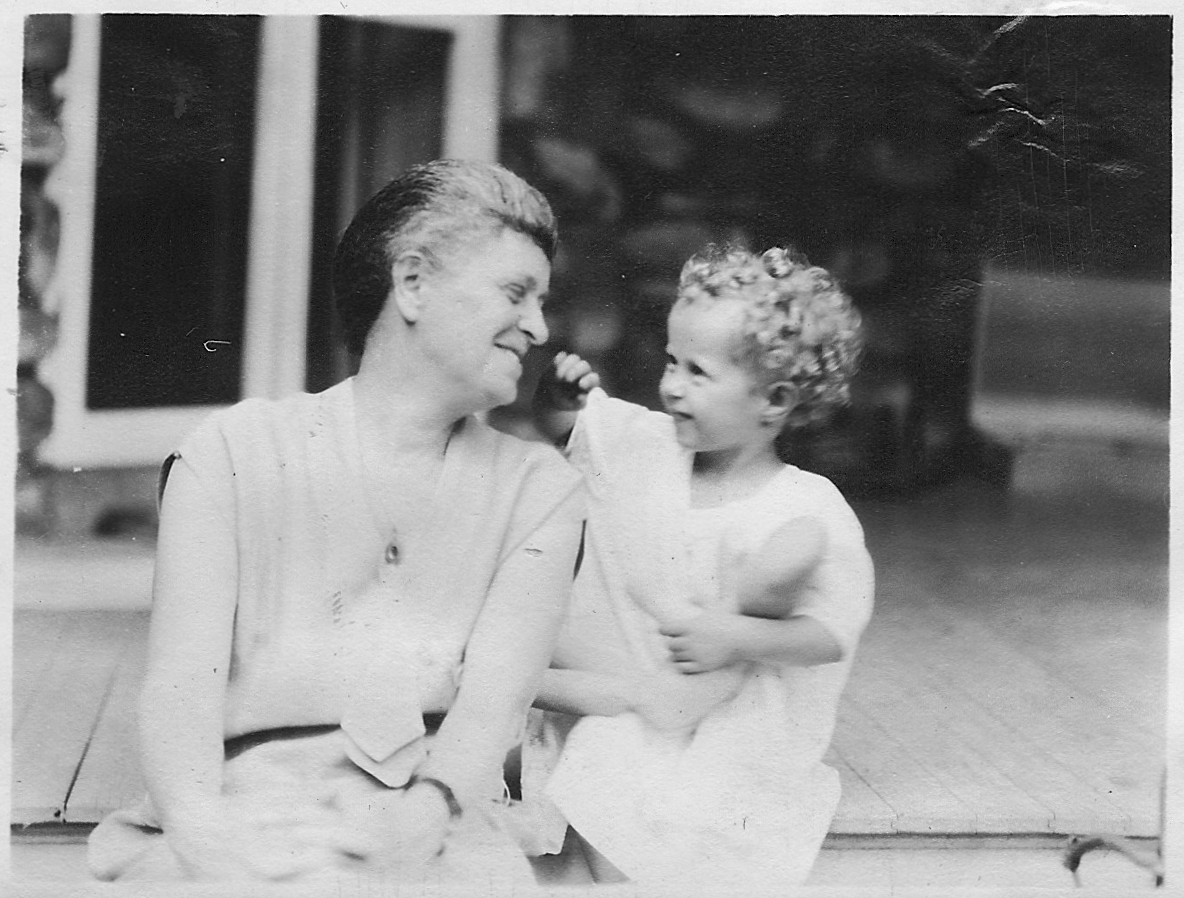
Apparently my grandfather was a genius at photographing children. In both of these photographs you see the joy in each person for the other. #52ancestors #52familyphotographs
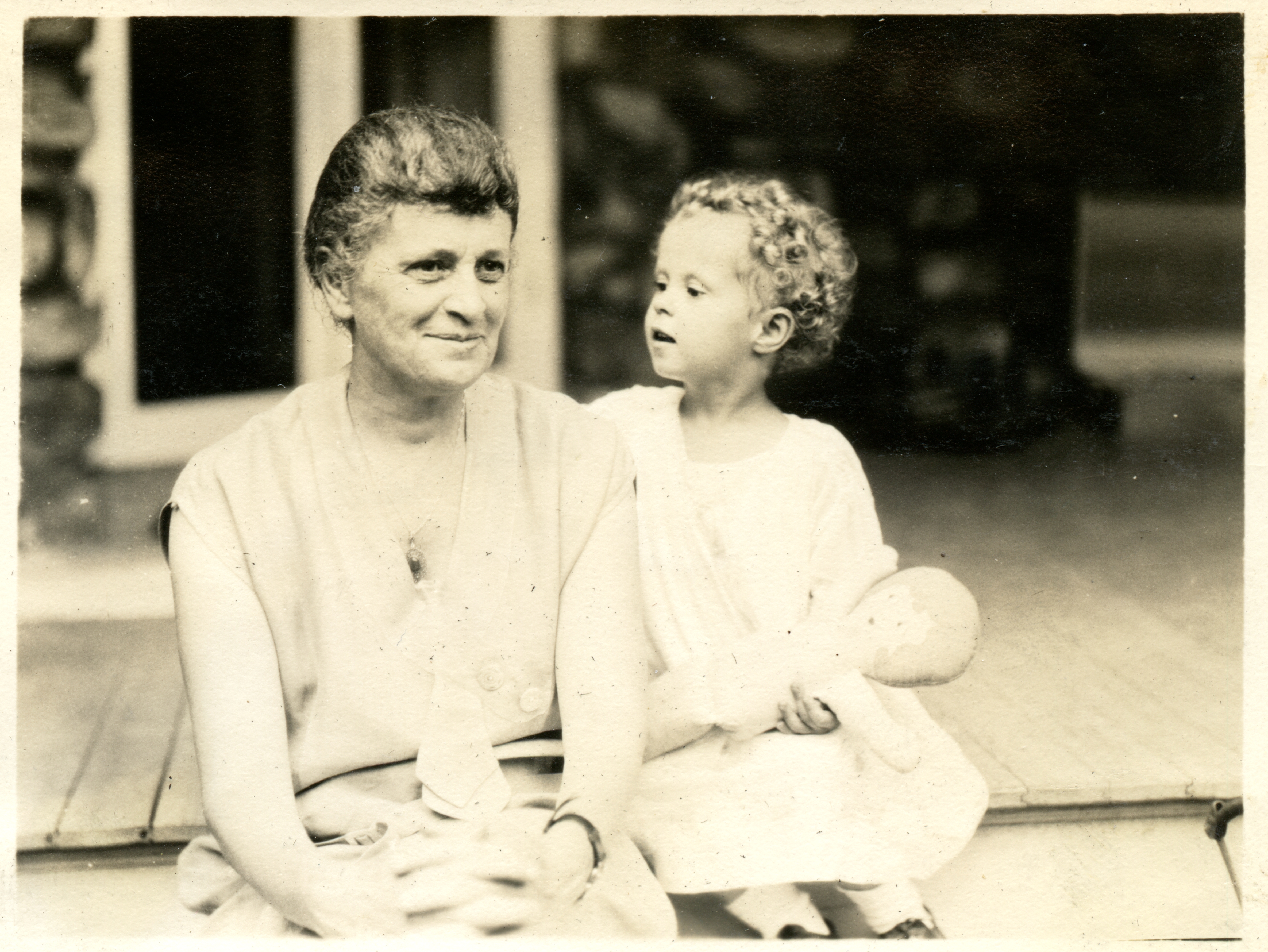
Jean Van Syckel and Louise Tompkins
Jean Van Syckel was born on 28 July 1875, probably in Flemington, New Jersey, to Chester and Mary Jane Mount Van Syckel. She was the youngest of their four children and the Flemington, She never married but the Flemington, Jersey City and Detroit, Michigan newspapers tracked her visits with her brother and sister. Louise Tompkins tells stories about the house and garden at 182 S. Main St. where she “vacationed” as a child. Mary and Jean kept a large garden and small orchard in the back yard of that house. Mary succumbed to dementia on Christmas day in 1952.
This week in #52ancestors I dedicate this photograph of Benjamin Jones, Civil War veteran and beloved father.
Benjamin was born 12 December 1833, at Hanover Furnace (Burlington County, NJ) to Richard and Susan Ellis Gibbs Jones. He was educated by a Mr. Gibbs who ran a school in nearby Plattsburgh, a small village that appears to have ceased to exist. He worked for his father and uncle Samuel Howell Jones and also appears to have taught school. In 1861, like many of the young men in his generation, he joined the Union Army and went off to war. Sadly, his experience as a soldier appears to have destroyed his physical health and he returned from the war in 1862 a broken man.
He married Mary Elizabeth Carrell Taylor on 20 October 1862 and they eked out an existence in Pemberton, New Jersey. Benjamin’s post-Civil War pension and other military documentation is voluminous, giving repeated evidence that he could no longer support himself and family doing hard physical labor such as farming or iron work. He appears to have gotten employment as a lamp lighter, and done other odd jobs in the community.
Benjamin and Mary Elizabeth Jones had eleven children together, two of whom died before reaching adulthood.
Arthur Wells Jones is the subject of this week’s #52ancestors essay and one who benefited from the recent online publication of the Camden Courier-Post. With all sorts of news to work through I was able to find an obituary; unfortunately the obituary was filled with information which conflicted with what I had documented.
Arthur W. Jones was born on 10 Dec 1875 at Pemberton, New Jersey to Benjamin and Mary Elizabeth Carroll Jones. He married Anna Mary “Annie” Wells on 3 July 1900. She was the daughter of Moses K. and Florence Lewis Wells. They lived at this time in Pemberton, but I am not sure when they moved to Camden. Arthur and Annie had one child, Barclay Gibbs Jones, born on 30 May 1901.
Although the obituary made it sound like a recent move, evidence in the 1910-1930 censuses show that the Jones family was in Camden as early as 1910. At that time he was a steam car engineer, possibly for the Pennsylvania/NJ Railroad. Their home is listed as 136 Dudley St., Camden. By 1915, the family has moved to 309 N. 40th St., and in this census Arthur is listed as a “portable engineer,” a job title which intrigued me. According to the International Steam Engineer of 1914, this is “one who operates a boiler or machine which directly furnishes or transmits power for any machine, appliance or apparatus used on or in connection with building operations, excavations or construction work, but does not include an operator of a drill.” A union newsletter gave a much more understandable description: “The steam or power shovel was first invented by William T. Otis in 1839, but it did not see extensive use until after the American Civil War, when it was developed as a railway workhorse. The men who operated the shovels were known as portable engineers, to distinguish them from the stationary engineers.” Pretty cool to think of Arthur Jones as playing the role of Mike Mulligan in my favorite children’s book Mike Mulligan and his steam shovel.
In 1920, Arthur appears to have been employed as an engineer in a shipyard and it is not clear whether this is still railroad work or not. By 1930, Arthur was retired from the steam shovel business and listed his employment as “salesman, tea and coffee.” Family stories line up with this as operating a milk delivery route with a side line in groceries.
Arthur died at Cooper Hospital on 26 February 1936 and is buried at the Odd Fellows Cemetery in Pemberton, NJ.
In this #52Ancestors essay I am going to explore the life of a person I only remember dimly: Philip Hine Prince, the brother of my grandmother Kathryn Marie Prince Jones Preston. He died when I was about 9, but I have a very vague memory of being with my family at my grandparent’s house at 22 Euclid Ave. in Merchantville, New Jersey and being told that this slight, spare man was my great uncle. Not being well versed in genealogical terms, my young mind struggled to comprehend how someone so slight could be “great.”
Philip Hine Prince was born on December 3, 1896, to George Cornell and Minnie Arabella Hine Prince. While his older brother George Raymond Prince was born in Bradford County, Pennsylvania, Philip was the first child born in New Jersey after the family moved to New Jersey. My grandmother came along several years later in 1904.
1918 Philip and his mother Minnie Hine Prince
Both Raymond and Philip have Census entries marked for World War I service but I have only been able to document Philip’s service. He joined up on 2 June 1918 at Fort Slocum, NY and was assigned as a private to Company B, 548th Engineers. Before shipping out to France, Philip was promoted to sergeant. The 548th was classed as an Engineer Service Battalion, and was attached to the 20th Engineers. The 548th arrived in Cherbourg just as the Armistice was consummated, and were utilized in the great drive to keep the A. E. F. warm during the ensuing winter. Most of their service was in the northern districts and the upper Loire basin.
With his brother Raymond, Philip joined the family business, Prince Concrete Co. On 3 February 1923, Philip married Gertrude Helen Williams (1893-1969), daughter of David C. and Martha Jane Reynolds Williams. They had two children:
Phyllis Martha Prince (1926-1985) married John Howard Walter Perkins
Janet Rae Prince (1928-) married George W. Johnson
Rosedale Baptist Church (image from Camden Courier Post
Philip and Gertrude were active in the Baptist church, attending and serving in many capacities at Rosedale Baptist Church. I have quite a few memories of this church from summers spent with my grandparents Kathryn and Leonard Preston (Kay’s second husband.) This was the first church in my memory that had a full immersion baptismal pool and I remember staring at it in wonder. My grandfather carefully explained that it was not a swimming pool. I had not, at the age of ten, ever seen anyone baptized, either infant or adult, so I am sure I pestered him with questions.
Image from Rivertonhistory.com
Philip eventually rose to become vice president under his father at Prince Concrete. He also served on the Pennsauken school board for two terms between 1954 and 1956, and then as president in 1957.
Philip Prince died 31 October 1974 at West Jersey Hospital in Camden and is buried at Bethel Memorial Park.
This week in #52ancestors I got to explore guardianship records when an ancestor died intestate leaving minor children. Thomas Hiram Mount was born on 11 April 1812 in East Windsor, Mercer County, NJ. He was one of four children of Hiram (1786-1847) and Margaret Allen (1790-1865) Mount.
He lived in a house purchased by his father in 1834 (online information incorrectly names his father as Ejirain) on One Mile Road in East Windsor where he brought his wife Catherine Fisher when he married her 14 January 1835. She was known as Kate. They had twelve children, nine of whom survived them:
Thomas operated a brickyard and kiln, Thomas H. Mount and Company, at “Buzzard’s Point,” the intersection of Dutch Neck Road and Stockton Street.
On the last Census taken before Thomas’s death, the household consisted of Thomas and Catharine, son Hiram (age 23), son William (age 21), son Addison (age 15), daughter Matilda (age 17), daughter Catharine (age 11), and son George (age 8). There are also two female servants, Anna Dutchess and Dina Laning.
Kate Fisher died on 9 July 1872 and is buried at Cedar Hill Cemetery in Hightstown, New Jersey. When Thomas died shortly thereafter (8 September 1876), he did not leave a will. His son Hiram returned to New Jersey from Ohio and with his sister Rebecca E. Applegate and brother in law Vincent Van Nest, applied for letters of administration. There are a few confusing pieces here as various documents seem to mix the identify of Thomas’s sister Rebecca with that of his daughter Rebecca. Rebecca Mount (1814-1892) married and Abijah Ely and then married George Cox. Thomas named his daughter Rebecca Ely Mount, after his sister. That Rebecca married Enoch Applegate. Both seem to be entered into various records as Rebecca Ely Mount, which is most confusing.
Hiram requests a complete inventory of his father’s farm and holdings. One intriguing bit is the “heap of mail” at the depot, making it sound as though no one made it into town to pick up the mail for some time before Thomas’s death. This is entirely possible as he died of a fever and the household may have been focused on nursing him.
Although there is nothing in the estate record to point to a guardianship, there were two minor children:
Catharine Fisher Mount. She is assigned to Rebecca Mount Cox in the guardianship record but by 1880 is living with Rebecca Ely Mount, married to Enoch Applegate
George C. Mount. His guardian of record is Hiram Mount, and he goes to live in Bethel Township, Miami County, Ohio with Hiram and Lucy Chamberlain Mount.
Thomas Hiram Mount buried next to his wife at Cedar Hill Cemetery in Hightstown, NJ. Three of his children appear to have moved west to Ohio (Hiram, Thomas Addison and George), the remainder stayed closer to home, most dying in Mercer County.
I discovered Carrie M. Mather on one of my subject forays into my family tree. I was trying to find all the World War I service men and women, and so I was taking a hard look at anyone who was born between 1880 and 1900. As I plugged names into Fold3 and Ancestry, I was careful to just look at military service. I was able to document quite a few male veterans but I was shocked at the number of female veterans I had. Carrie is descended from a Mount family line firmly entrenched in New Jersey. And yet her story compels me.
Carrie Morton Mather was born in Elizabeth, New Jersey on 26 October 1886 to Frank N. (1855-1921) and Sarah Elizabeth Applegate (1855-1944) Mather. Frank and Lizzie Mather had two daughters, Caroline and Ida (1882-1949). Carrie attended the New Jersey State Normal school, graduating in 1907. In the 1910 Census she living with her parents and is employed as a teacher.
In December of 1917, she boarded the Espagne at the port of New York to sail to France to assist with YMCA Canteen work.
In 1919 I find her listed as a sophomore (non matriculate due to lack of course credit) at Pomoma College in California. Later she is listed in a University of California register as graduating early on 17 Dec 1920 from University of California, Berkeley with a BA.
The California Alumni Monthly for 1922 reports that she is with the Girls’ Baptist Mission Dormitory in Iloilo, Philippines. And the Annual of the Northern Baptist Convention for that same year reports that she received her appointment.
She appears to have left the Philippines on 9 January 1924, stopping in Houghon China and Japan before returning to the US. That same year she marries Lawrence E. Blackman, a Canadian music teacher. The actual record escapes me but a newspaper article in October mentions her recent marriage. Lawrence and Carrie are living in Peoria, Illinois in the 1930 Census, where he is employed as a music teacher. In 1944 the couple moved to Wilkes-Barre, Pa. where they become directors of the Dupont Community house.
After that I loose track of her, except that she appears to have been living in Silver Creek, NY when she died in January 1969. It is possible that she settled there as I believe Ida Mather and her husband Harry Burton Skidmore lived in the area.
I would love to know more about her experiences abroad. What made her give up a comfortable teaching position and strike out for a war zone? And then return, shake off the dust and head in the opposite direction to the Philippines? If it weren’t for her passport applications, I might never have found this clue.
ca. 1893 The Tompkins clan (from back left: Grace, Louise, Haviland, unknown lady, Vreeland, and Harold)
This week in #52Ancestors brings me to my namesake, Louise Tompkins. Emma Louise Tompkins was the youngest daughter of Samuel D. and Gettianna Vreeland Tompkins. She was born 11 October 1881 in Jersey City, New Jersey. She lived with her parents at 533 Communipaw Ave. and there are many newspaper articles describing her participation in family trips and Jersey City social events. She may also have been something of a singer, as there is a Louise Tompkins who is listed as soloist for various church and social gatherings. She appears to have preferred Louise to Emma when she had the choice but occasionally there will be a record that refers to her as Emma. All the family stories I heard growing up referred to her as “Aunt Lou.”
One such record is her marriage to John J. Voorhees on 23 November 1918. John J. or Jack as he was called, took over his father’s company, the Voorhees Rubber Company. He was born on 9 April 1876 and had been educated in Jersey City at the Lafayette College. He married first Florence Eliot Voorhees (no relation) who was the daughter of Abraham and Martha Voorhees of New Brunswick, New Jersey. They had one daughter, Florence Eliot Voorhees (1908-2000). Florence died tragically in a carriage accident on 16 July 1910. The family was traveling in a horse drawn carriage when a train rattled through on the tracks below the street. The horse bolted and dragged the carriage over the embankment. Florence was killed and her husband and daughter were both injured.
Louise and Florence lived together after the death of Jack on 23 December 1948. At some point they moved out of the house on Duncan Ave. and moved across the street to the apartment building on the opposite corner. Louise Voorhees died 13 February 1971 and is buried at Arlington Cemetery.
This week in #52Ancestors I took the opportunity to put several people into context, as George Grant Tennant is one of the few Tennant children who lived to adulthood.
George Grant Tennant was the son of Thomas and Hannah Cardiff Tennant, born 1 Feb 1869 in Jersey City. He was baptized at St. Mark’s Chapel, Jersey City. George was educated in the public schools, namely Public School No. 1 and later the High School, from which he graduated in 1888. He graduated from Columbia University Law School in 1891 and was admitted to the New Jersey bar in 1892 as an attorney and as a counselor in 1895. He went into practice with John W. Queen.
George Tennant married Zora McBurney (1863 or 1869-1895) on 1 June 1893. She died shortly after the birth of their son Donald McBurney Tennant (5 June 1895-22 January 1896). Both mother and child are buried in Green-Wood Cemetery in Brooklyn.
George married again on 12 April 1898 in Jersey City to Anne Van Syckel daughter of Chester and Mary Jane Mount Van Syckel. Anne Van Syckel was born 23 Aug 1870 in Flemington, New Jersey and baptized in 1883 at Flemington Baptist Church. She attended Vassar College and graduated in 1893. We have wonderful photographs of her playing a part in a Greek play, which I have now learned was Antigone.
Front row: Anne VS Tennant, Anne VS Tompkins, George G. Tennant, Louise Tompkins, Mary TOmpkins is the little girl on the right, Harold and Katharine Tompkins are back row, second and third from the right.
George and Anne Tennant had three children: Katharine Vansyckel Tennant (1899-1972), George Grant Tennant Jr. (1900-1982), and Jean Cardiff Tennant (1905-1990).
George Tennant was a member of the New Jersey House of Assembly from 1900 to 1902. His candidate bio in the Jersey Journal in 1899 stated that he was one of the most popular young Democrats in the Ninth Ward. At that time he attended the First Presbyterian Church, where he taught Sunday School. A year later, when he ran again, the paper was a little less supportive, as an article appearing in the Jersey Journal of 1 November 1900 spent two columns shredding Tennant and everything he had stated in print that year. He served as the president of the Jersey City Board of Education from 1908 to 1913.
Tennant was a friend of Jersey City Mayor H. Otto Wittpenn and assisted in the nomination of Woodrow Wilson for President in 1912. In 1913, George Tennant was appointed a Common Pleas judge by Governor James F. Fielder, serving from 1913 to 1918. Towards the end of his lift he became a member of the Old Bergen Reformed Church and was active in the Everyman’s Bible Class there. He was also a 32nd degree Mason and a member of the Scottish Rite.
Anne Tennant was active in the Jersey City College Club and was a member of the Odd Volumes Club, a sort of social book club to which many of the Tompkins women also belonged. George and Anne vacationed in Dorset, Vermont.
Dorset, VT
Anne died at home (613 Bergen Ave.) on 9 March 1938 and is buried in Green-Wood Cemetery in Brooklyn. George died at Lea Haven, a nursing home in Madison, NJ while recovering from an appendectomy on 3 February 1948 and is also buried in Green-Wood.
Once again I select a name for my #52ancestors essay so unusual that I should have no trouble picking up the thread of his life story. And once again, I re-learn the lesson about common words in names and geographic location. This time I picked Francis Mumford Gibbs.
Francis was born on 17 September 1898, most likely in Burlington County, NJ but also possibly Monmouth as that is where the family is living in 1895, to Barclay White (1868-1957) and Elizabeth Watts Jones (1873-1900) Gibbs. He was the youngest of three children but the only one to see his thirtieth birthday. His sister Mattie J. Gibbs was born in 1892 but died in 1919 and his brother Elton Russell was born in 1894 but died in 1917. Their mother, Elizabeth “Lizzie” Jones Gibbs died in 1900.
The family moved to Philadelphia, where Barclay worked as a machinist and there Barclay married Jennie S. Greenwood on 12 November 1902. Ten years later the family is living in York, PA where Barclay Gibbs was employed by Gulf Gas and Oil as a manager. It is in York that the family lost both Mattie and Elton, Mattie to tuberculosis and Elton to a heart defect. Francis married York native Margaret Elmira Herman sometime around 1925. Francis also seems to have moved around a lot as each of their four children are born in different places:
William Bruce Gibbs (1926-1954) b. Philadelphia
Francis Mumford Gibbs Jr. (1930-2012) b. Michigan
Barclay White Gibbs 2nd (1933-2010) b. Camden, NJ
John H. Gibbs (1936- ) Trenton?, NJ
Francis eventually settled in Trenton, NJ where he worked for a company called Thermoid, which made rubber brake pads. The children all appear to have come of age in Hamilton township.
Francis died suddenly from a heart attack on 25 April 1959. He is buried in Ewing Cemetery and shares a headstone with William Bruce, who tragically died in an automobile accident in 1954.
The most complicated part of investigating this story was the family name: the Gibbs family is an old and fertile family in New Jersey and many of the branches named their children after other branches. The name Barclay, for instance, pops up all over the place, most likely because it too is a place name. Most concentrated in Burlington and Camden counties, which made parsing out this line more difficult than I expected. Also, I came to realize that Francis Mumford Gibbs may have gotten his name from his mother’s sister Susan Gibbs Jones, who married Francis Mumford, whom I know absolutely nothing about. But that is for another essay.



 Although the obituary made it sound like a recent move, evidence in the 1910-1930 censuses show that the Jones family was in Camden as early as 1910. At that time he was a steam car engineer, possibly for the Pennsylvania/NJ Railroad. Their home is listed as 136 Dudley St., Camden. By 1915, the family has moved to 309 N. 40th St., and in this census Arthur is listed as a “portable engineer,” a job title which intrigued me. According to the International Steam Engineer of 1914, this is “one who operates a boiler or machine which directly furnishes or transmits power for any machine, appliance or apparatus used on or in connection with building operations, excavations or construction work, but does not include an operator of a drill.” A union newsletter gave a much more understandable description: “The steam or power shovel was first invented by William T. Otis in 1839, but it did not see extensive use until after the American Civil War, when it was developed as a railway workhorse. The men who operated the shovels were known as portable engineers, to distinguish them from the stationary engineers.” Pretty cool to think of Arthur Jones as playing the role of Mike Mulligan in my favorite children’s book Mike Mulligan and his steam shovel.


 I discovered Carrie M. Mather on one of my subject forays into my family tree. I was trying to find all the World War I service men and women, and so I was taking a hard look at anyone who was born between 1880 and 1900. As I plugged names into Fold3 and Ancestry, I was careful to just look at military service. I was able to document quite a few male veterans but I was shocked at the number of female veterans I had. Carrie is descended from a Mount family line firmly entrenched in New Jersey. And yet her story compels me.
 In December of 1917, she boarded the Espagne at the port of New York to sail to France to assist with YMCA Canteen work.
 George Grant Tennant was the son of
  George Tennant married Zora McBurney (1863 or 1869-1895) on 1 June 1893. She died shortly after the birth of their son Donald McBurney Tennant (5 June 1895-22 January 1896). Both mother and child are buried in Green-Wood Cemetery in Brooklyn.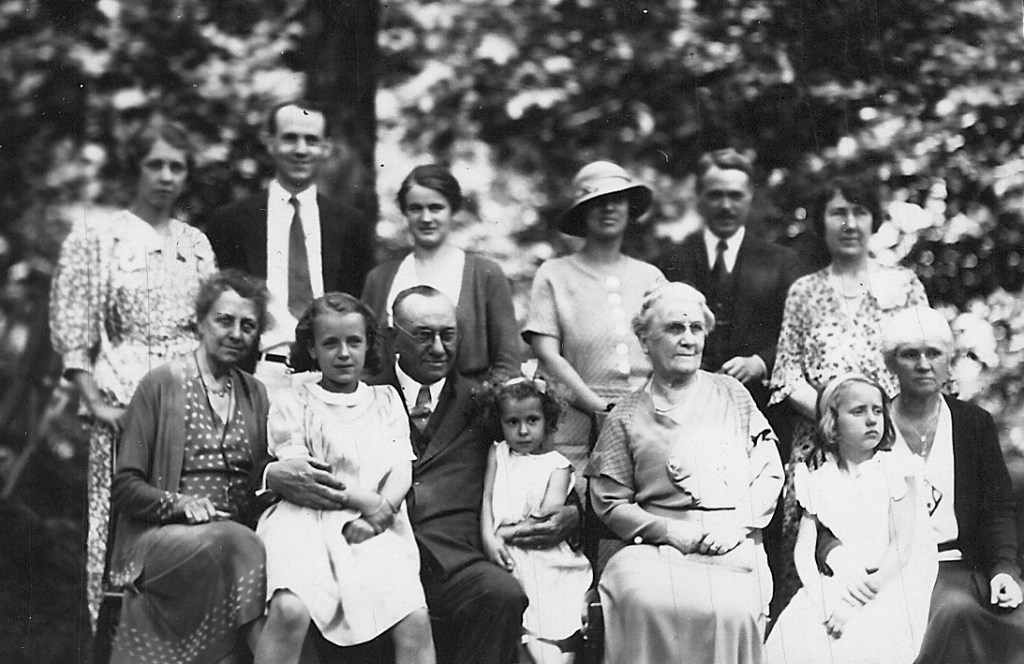


 George and Anne Tennant had three children: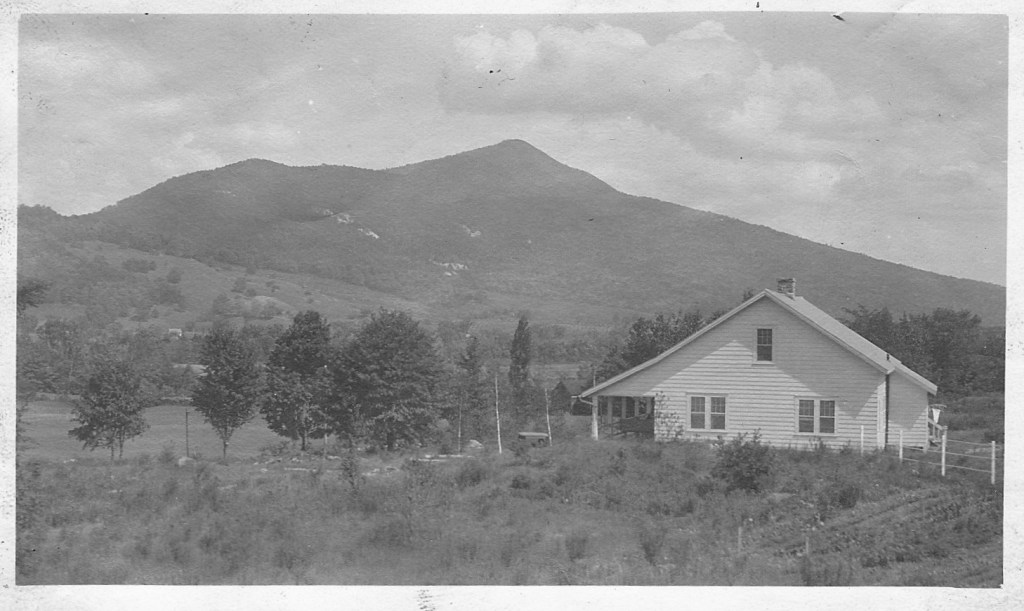


 His sister Mattie J. Gibbs was born in 1892 but died in 1919 and his brother Elton Russell was born in 1894 but died in 1917. Their mother, Elizabeth “Lizzie” Jones Gibbs died in 1900.
 Francis eventually settled in Trenton, NJ where he worked for a company called Thermoid, which made rubber brake pads. The children all appear to have come of age in Hamilton township.
 Telling My Story