
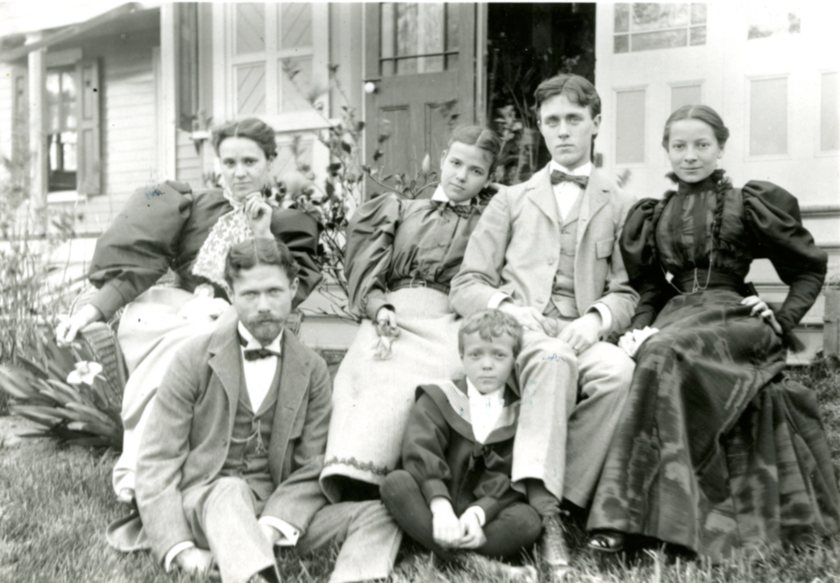
This week my #52Ancestors post focuses on James Haviland Tompkins, the fifth child of Samuel Dusenbury and Gettianna Vreeland Tompkins. Haviland (apparently his preferred name) was born on 15 July 1877 in Jersey City.

He graduated from New York Law School in 1900 and opened a commercial law practice in Jersey City. An interesting side note about New York Law School: it was established in 1891 by a group of Columbia College School of Law faculty, students, and alumni who were at odds with Columbia’s trustees’ desire to interfere with the faculty teaching practices.
In addition to his law practice, Haviland is also listed as the Secretary of the Smooth-On corporation. He and his brothers all seem to have been involved in the family business in one way or another.
Haviland married Eleonore Heike around 1908. An engagement announcement is as close as I can get to an exact marriage date as shortly after the engagement is announced, the scandal that rocked the Heike family also breaks. Charles R. Heike was the secretary of the American Sugar Refining Company was tried and convicted in 1910 of conspiracy to defraud the government in a case of fraudulent weighing. The sentence was waived when the judge determined that Heike was in such poor health that he would die in prison, and instead he died at home. His family was terribly affected by it as Eleonore (whose death may have been directly caused by something else) died in 1912 shortly after the birth of her daughter Eleonor Marie Tompkins in 1910. Heike’s sister later committed suicide and her brother left the country and was later committed to a mental institution.

Haviland and Eleonor appear to have moved back to the Tompkins home on Communipaw Ave. Seven years later, Haviland married Elizabeth Carol Baldwin (1891-1950) of Jersey City on 27 December 1919. Early on in their marriage they lived at 117 Bentley Ave, which was loaded with Tompkins relations. Eventually, they made their home in South Orange, New Jersey, where they raised Eleonor and their two children Carol Tompkins (1920-2016) and James Haviland Tompkins (1922-1995).
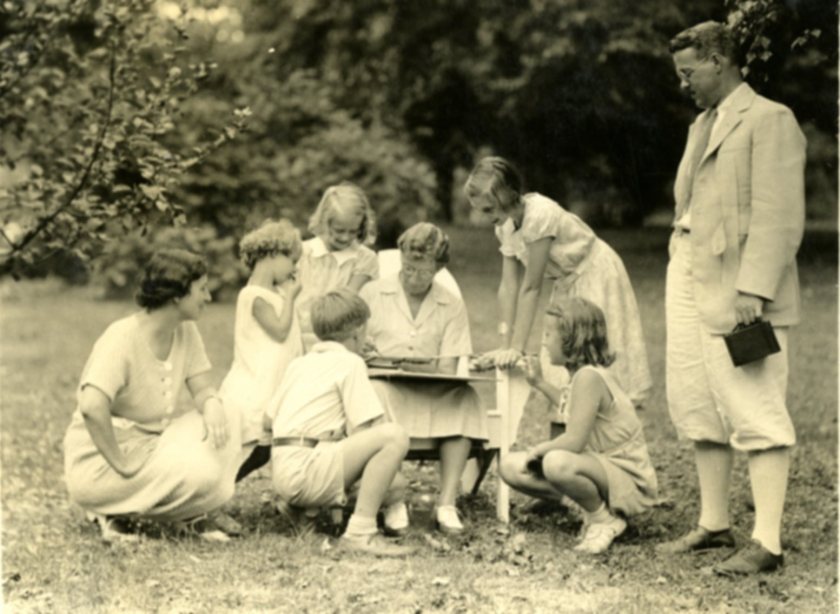
Sadly, Haviland died suddenly while vacationing in Southern Pines, North Carolina on 4 March 1942. He is buried at Arlington Cemetery in Kearny, New Jersey.
 This week in #52Ancestors Gettianna Vreeland Tompkins is the subject, but her essay would be very brief without a mention of the family surrounding her. Gettianna, or Gitty Ann as she was sometimes called, was the youngest child and only daughter of Nicholas (1789-1873) and Elizabeth Van Ripen (1803-1889) Vreeland.
 Samuel and Gettianna attended Lafayette Church around the 1884-5 period. This church apparently started off as a Reformed Protestant Dutch Church in 1863 but may have merged with other churches towards the end of the century.
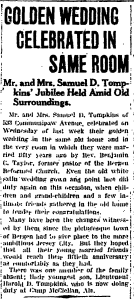 Gettianna and Samuel Tompkins celebrated their golden wedding anniversary about a month before she died on 9 February 1918 of pneumonia. The article in the paper states that this happened in the same house they were married in but this bears further research as even as Jersey City consumed the village of Bergen, the addresses do not match city directories and census records. It should also be noted that her youngest child, my grandfather Harold Doremus Tompkins was absent from the festivities due to his involvement in World War I. His military training prior to shipping overseas took him to Camp McClellan, where his great grandson Barclay G. Jones IV also completed some of his extensive military training in 2017-18, about one hundred years later.
 Mary Sleght Brown is a recent discovery and an excellent reminder to return to people every few years for whom you have had no success. For some time I knew that Abraham V.W. Tompkins had married a Caroline Brown, but I could find no firm information about where she came from. Then one day I returned to Abraham, thinking surely by now, someone has put up some record on this family.
 According to the bible, Mary Sleght was born on 4 June 1785 and married
 I have to admit, after the DeWolfe media frenzy about that family’s discovery that they made their money in the slave trade, I was alarmed when I found that multiple generations of the Tompkins family had lived in Rhode Island during the height of the Atlantic slave trade. Even if they were not involved in shipping, all the ancillary trades that go into supporting the shipping industry are tied to that profit source as well. So for this week of #52ancestors I picked an ancestor whose life would have touched on this dark period in American history.
 Little Compton and the neighboring town of Tiverton were first established as part of Massachusetts in the middle of the 17th century. In 1673, the town was plotted and twenty-nine settlers made claims, most of them Puritans. Later in 1747, the state of Rhode Island formed and the towns became part of that. A Colonial Census was done at that time and Samuel is listed in Little Compton, New Port County.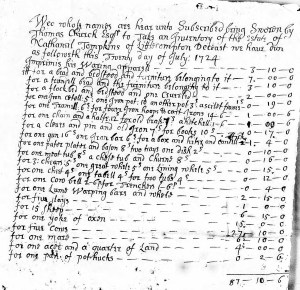


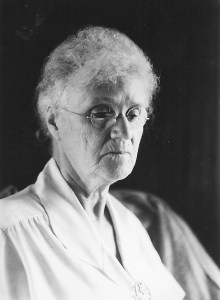 This week of #52ancestors brings us to Grace Elizabeth Tompkins, eldest daughter of my great grandfather Samuel Dusenbury Tompkins (1839-1926). I had the wrong birth date in for her but this entry gave me a chance to interview Louise Tompkins about her memories and so I am posting it on 4/10 as opposed to 10/4!
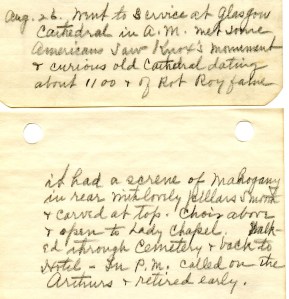 I know Grace took one extended trip with her mother and sister Louise because she left a diary among her possessions and it has come down to me. I do not know what year the trip is but it is some time before 1918 as it mentions her mother and Gettianna dies in February 1918. I think it may be 1907 as the diary starts with a family send off and she mentions that she is sailing on the S. S. Carpathia. Anyone familiar with the story of the Titanic knows this ship was probably busy in April of 1912 and Grace starts the diary on April 27th. The diary gives descriptions of ship life, ports of call and also mentions land travel, especially in the British Isles. I note especially that Grace attended services at Glasgow Cathedral on August 26th, the same cathedral visited by Louise Tompkins and myself over 100 years later on a never-to-be-forgotten visit to the Scottish Highlands.
 After her mother’s death in 1918, Grace traveled with her father as well as acting as hostess at various social events at the house on Communipaw Ave. Although I know that Grace traveled abroad extensively before this, one trip caught my attention because it was mentioned in the newspapers. In 1927, Grace traveled abroad to Europe with an interesting intersection of female relatives: Louise Tompkins Voorhees, Florence Voorhees, Eleanor Tompkins (her niece) and Miss Ethel Hodsdon (a cousin from the Tennant side of the family).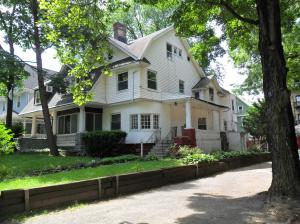
 Katharine (with an A, thank you) VanSyckel Tennant was the first child born to Anne Vansyckel and George Grant Tennant. She was born 15 February 1899 in Jersey City where her father and mother lead a fairly high profile life. George Tennant was a lawyer, judge and member of the school board. Their social life is tracked in the Jersey Journal quite regularly.
 Katharine was soon joined by a brother George Grant Jr. (1900-1982) and a sister Jean Cardiff Tennant (1905-1990). She and her siblings attended Lincoln High School, which their father was instrumental in establishing. Katharine went on to attend Vassar College, graduating with the class of 1920. After college she met and married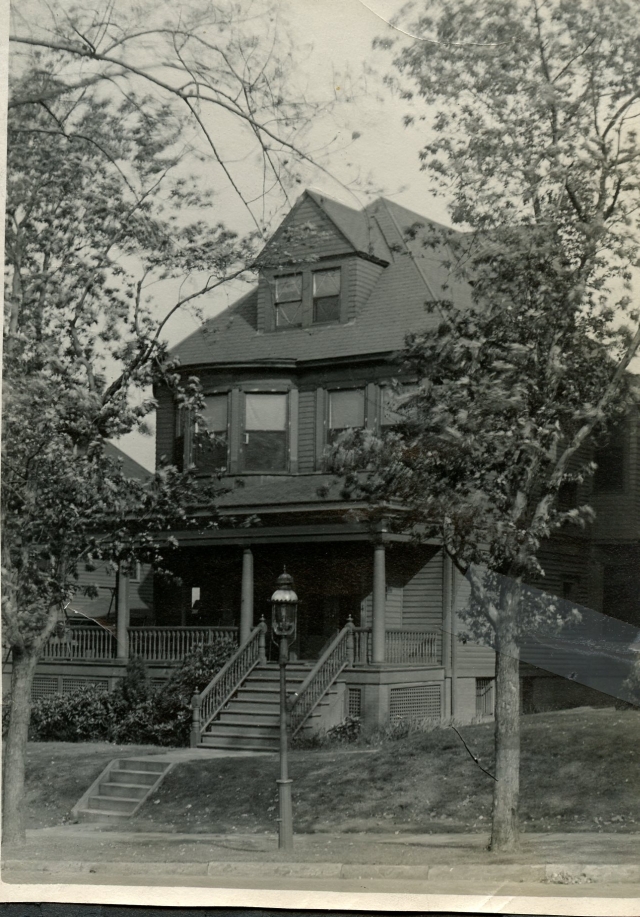

 Eugene Tompkins was born in 1855 to Abraham Van Wangenin and Caroline Brown Tompkins. Abraham and Caroline lived in Dutchess County, New York, on a farm outside of Hyde Park. This family is another source of genealogical frustration for me as the Tompkins are rife in Dutchess County and the surrounding area and each generation named their children after their favorite siblings, creating confusing swirls of Michaels, Rachels, James, Anns, Gilberts and Johns. To make it even more frustrating, Abraham dies at a relatively early age in 1869, and his children are dispersed throughout the Tompkins clan. So I found Eugene easily enough in the 1860 and 1870 Census but I had let the search drop several years ago in the face of easier quarry.

 Telling My Story